
What happens When a Rubber Part Faces Constant Rubbing, Scraping, and Friction Every Day?
Over time, its surface can wear down, lose strength, and stop working properly. So, choosing the right abrasion-resistant rubber matters for applications where rubber parts face regular wear.
A good abrasion-resistant rubber can handle repeated contact with rough surfaces without wearing out too quickly. As a result, it can help parts last longer, reduce frequent replacements, and support reliable performance.
In this blog, we explain what makes rubber resistant to abrasion, which rubber materials perform well against wear, and how to choose the right one for your application.
Why Is Abrasion Resistant Rubber Important?
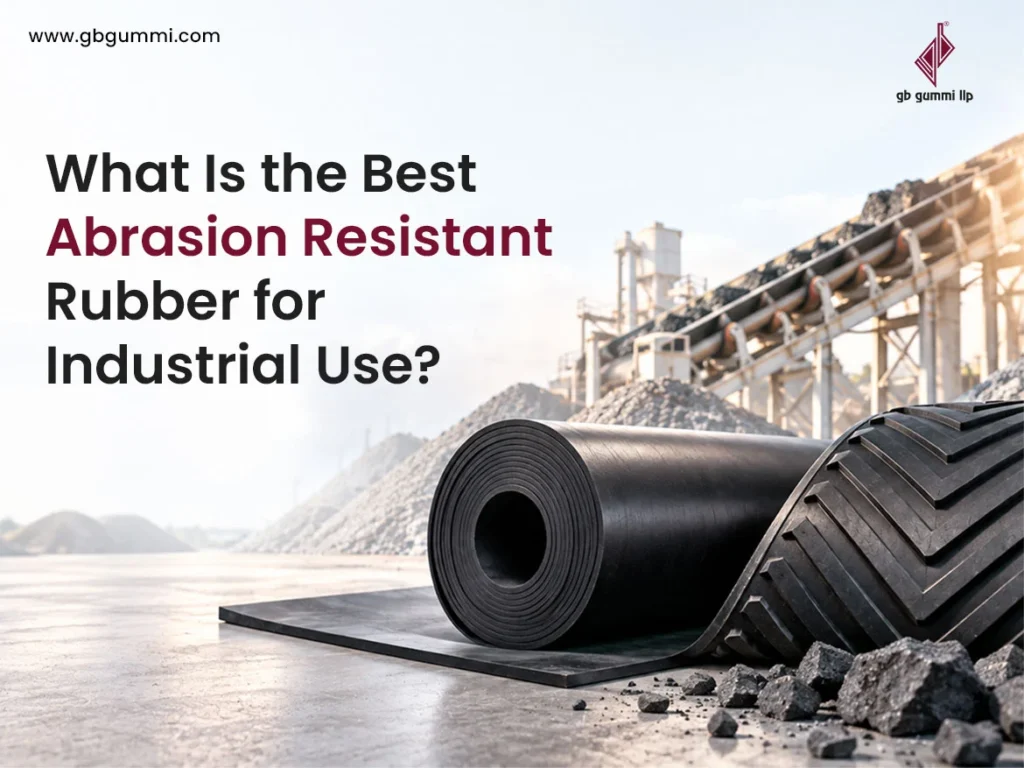
Abrasion happens when a rubber surface repeatedly rubs against another surface or material. For example, a conveyor belt may constantly contact rocks, sand, minerals, or other rough materials. Over time, this contact can slowly wear the rubber away.
Abrasion-resistant rubber is made to handle this type of regular wear. Therefore, it is useful for components that work in environments with high levels of friction, rubbing, or impact.
However, abrasion resistance depends on more than the type of rubber. Hardness, strength, flexibility, compound formulation, and working conditions can also affect how quickly a component wears.
Therefore, manufacturers should consider the complete application before selecting a rubber material.
Which Materials Offer Good Abrasion-Resistant Rubber Properties?
Different types of rubber offer different levels of wear resistance. Therefore, the best option depends on the application and its working conditions.
Some commonly used materials include:
- Natural rubber: A natural rubber compound offers good strength, flexibility, and wear resistance. It can also handle repeated impact well. Therefore, manufacturers often use it in demanding industrial applications.
- SBR: An SBR Compound offers good abrasion resistance along with useful strength and durability. As a result, manufacturers commonly use SBR in tires, conveyor belts, industrial rubber parts, and other applications that face regular wear.
- NBR: Nitrile rubber offers useful resistance to abrasion as well as oils and greases. Therefore, it can work well when a component needs to handle both friction and oil exposure.
- Polyurethane: Polyurethane can provide very high abrasion resistance. However, manufacturers must also consider temperature, chemicals, flexibility, and other operating conditions before choosing it.
Each material has different strengths. Therefore, no single rubber is the best choice for every application.
How to Choose Abrasion Resistant Rubber for Your Application
Choosing the right abrasion-resistant rubber requires more than checking its wear resistance. Manufacturers should also understand the complete environment in which the rubber part will work.
Important factors include:
- Type and amount of friction
- Contact with rough or sharp materials
- Required hardness and flexibility
- Operating temperature
- Exposure to oils, chemicals, or water
- Amount of impact and mechanical stress
- Expected life of the rubber component
For example, a conveyor belt carrying rocks may need different properties from a rubber roller used inside a machine. Similarly, a component exposed to both oil and friction may require a different rubber material.
Therefore, working with an experienced rubber compound manufacturer can help businesses choose a compound that matches their actual requirements.
Abrasion Resistant Rubber Applications Across Industries
Industries use abrasion-resistant rubber in many components that face repeated rubbing, friction, or impact.
Mining and material-handling equipment are common examples. Rubber parts in these industries regularly contact rocks, minerals, sand, and other rough materials. Therefore, strong wear resistance can improve component life.
Similarly, conveyor belts face continuous movement and contact with different materials. Rubber rollers, liners, hoses, tires, seals, and protective components may also experience regular abrasion.
Automotive and industrial machinery applications also need rubber parts that can handle repeated movement and friction. However, wear levels and types can vary greatly between applications.
As a result, manufacturers need to understand how the component will work before choosing a rubber material.
What Determines the Performance of Abrasion-Resistant Rubber?
The type of rubber matters, but it is not the only factor affecting wear resistance. The complete rubber formulation also plays a major role in performance.
For example, a natural rubber compound can provide a strong combination of elasticity, strength, and wear resistance. Meanwhile, an SBR Compound can offer a useful balance of abrasion resistance, durability, and mechanical properties.
Other parts of the formulation also matter. Fillers, curing systems, hardness, and other ingredients can change how the rubber performs. Temperature, pressure, friction, and contact materials can also affect how quickly a component wears.
Therefore, manufacturers should not choose rubber based on the base material alone. Instead, the full compound should match the application’s working conditions.
GB Gummi for Reliable Abrasion Resistant Rubber Compounds
At GB Gummi, we understand that every application faces different levels and types of wear. Therefore, we develop rubber compounds based on the actual working conditions and performance needs of the final component.
As a rubber compound manufacturer and one of the most experienced in India, we work with different materials and formulations to meet a wide range of industrial requirements. We consider abrasion, impact, hardness, flexibility, temperature, and environmental exposure while developing compounds.
At GB Gummi, we focus on balancing wear resistance, strength, flexibility, and durability. By understanding how and where a component will work, we help manufacturers choose abrasion-resistant rubber compounds designed for reliable, long-lasting performance.