
What if one material could handle extreme temperatures, resist weathering, and still perform consistently over time?
That material is Silastic rubber.
Today, industrial performance is no longer just about making systems work. Instead, industries expect materials that last longer, reduce maintenance, and deliver consistent results even under pressure. From automotive systems and electrical setups to healthcare and consumer products, the demand for reliable materials continues to grow.
That is exactly where Silastic rubber, a high-performance silicone rubber compound, makes a real difference.
In this blog, we will explain what Silastic rubber is, how it is formed, where it is used, and why this advanced silicone material plays such a critical role in modern manufacturing.
What is Silastic Rubber and How Is It Formed?
To begin with, Silastic rubber is a type of silicone material made from silicone polymers containing silicon, oxygen, carbon, and hydrogen. Unlike traditional rubber, which depends mainly on carbon chains, this structure gives silicone better stability and resistance.
To create a usable silicone rubber compound, manufacturers mix raw silicone polymer with reinforcing fillers, curing agents, and performance additives. This step, known as compounding, directly affects the material’s final performance.
Moreover, one of the most widely used variants is silicone rubber VMQ (Vinyl Methyl Silicone). It offers an ideal balance of flexibility, strength, and temperature resistance. Because of this, industries use it across both standard and high-performance applications.
After compounding, manufacturers shape the material and cure it using heat or chemical processes. As a result, Silastic rubber gains its final properties such as elasticity, durability, and long-term stability.
Key Properties of Silastic Rubber
When it comes to performance, Silastic rubber stands out for combining multiple advantages in a single material. More importantly, these properties remain stable over time.
- Wide temperature resistance – performs in both extreme heat and cold without losing structure.
- Weather and UV resistance – this silicone material does not crack or degrade easily in outdoor conditions.
- Long-term flexibility – maintains elasticity even after extended use
- Electrical insulation – silicone rubber VMQ provides safe, reliable insulation.
- Chemical stability – resists moisture, oils, and several industrial chemicals.
Therefore, these properties make Silastic rubber a dependable option for industries that require consistent and long-lasting performance.
Applications of Silastic Rubber Across Industries
Because of its versatility, Silastic rubber supports a wide range of industrial applications. In fact, industries rely on it where failure is not an option.
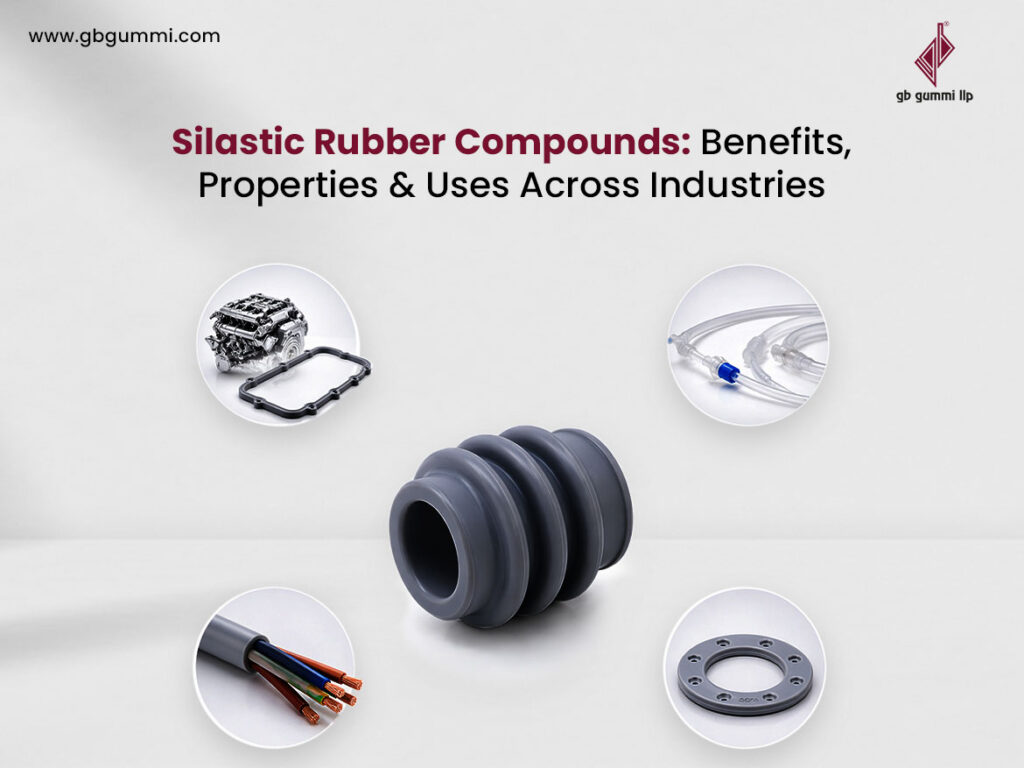
For instance, in the automotive sector, manufacturers use it for seals, gaskets, and hoses that must handle both heat and movement. The durability of the silicone rubber compound ensures long-term performance.
Similarly, in the electrical and electronics industry, this silicone material is used for insulation, cable protection, and connectors. Since it resists heat and maintains insulation, it improves both safety and reliability.
In addition, medical applications depend on silicone rubber VMQ due to its stable, non-reactive nature. It is commonly used in tubing, seals, and precision components where hygiene matters.
Apart from that, consumer products such as kitchenware and wearables also use silastic rubber for its flexibility and durability. At the same time, industrial machinery benefits from its ability to maintain sealing performance and control vibration.
Advantages of Using Silastic Rubber in Silicone Rubber Compounds
Over time, industries have shifted towards silicone rubber compound solutions for several practical reasons. Most importantly, these advantages directly impact efficiency and cost.
- Long service life – components made from silastic rubber last longer and reduce replacement cycles.
- Consistent performance – this silicone material performs reliably under changing conditions.
- Design flexibility – silicone rubber VMQ can be molded into complex shapes easily.
- Reduced maintenance – fewer failures lead to lower downtime and operational costs.
- Strong performance under stress – maintains integrity even in demanding environments.
As a result,silastic rubber is a smart and efficient choice for industries seeking long-term reliability.
Why Choose Silastic Rubber Solutions from GB Gummi?
At GB Gummi, we believe that the right material drives performance.
That is why we focus on developing high-quality silicone rubber compound solutions tailored to different industrial needs. In addition, our expertise in advanced silicone materials, including VMQ silicone rubber, enables us to deliver consistent, reliable results.
Every compound we produce is designed to perform in real-world conditions. Consequently, industries can reduce downtime, improve efficiency, and ensure long-term reliability.
With a strong focus on quality and innovation, GB Gummi continues to support businesses with dependable silastic rubber solutions that are built for today and ready for tomorrow.