
Rubber may look like a simple material, but the performance it’s expected to deliver is anything but. A rubber component may need to handle extreme heat, oils, chemicals, weather, pressure, or constant movement. Therefore, choosing the right material and compound can directly affect how well the final product performs. This is where experienced rubber manufacturing companies make a difference. They understand that different applications require different properties, formulations, and performance levels.
At GB Gummi, this understanding shapes how we develop rubber compounds for diverse industrial requirements. With expertise across materials such as silicone rubber compound, EPDM rubber compound, SBR compound, and FKM Compound, the focus stays on creating solutions that match real-world operating conditions.
What Sets Experienced Rubber Manufacturing Companies Apart?
Not all rubber applications face the same challenges. For example, a seal exposed to high temperatures has very different requirements from a rubber component used outdoors. Similarly, parts that contact oils, fuels, or chemicals need materials that maintain their properties in those environments.
As a result, experienced rubber manufacturing companies look beyond the basic rubber product. They consider the operating environment, temperature range, chemical exposure, mechanical stress, and expected service life.
A good rubber compound manufacturer understands both rubber materials and how to make them. This knowledge helps industries choose the right rubber compound for their needs. Instead of using the same material for every product, manufacturers choose a compound based on where and how it will be used.
How Rubber Manufacturing Companies Choose the Right Compound
Choosing the right rubber compound is important because every application has different needs. Some products need to handle heat, while others need protection from water, weather, oil, or chemicals. Therefore, rubber manufacturing companies choose compounds based on the conditions they will face.
- Silicone rubber compound: This compound can handle a wide range of temperatures while staying flexible. Therefore, it works well for products that need to perform in both hot and cold conditions.
- EPDM rubber compound: EPDM can resist water, weather, and ozone. As a result, it is a good choice for outdoor products and applications that face changing weather conditions.
- SBR compound: SBR offers good wear resistance and works well for many general uses. It also provides a good balance between performance and cost.
- FKM Compound: FKM can handle high temperatures, oils, fuels, and many chemicals. Therefore, it is often used for products that work in tough industrial conditions.
By understanding the benefits of each material, rubber manufacturing companies can help customers choose the right compound for their needs and working conditions.
Quality Matters Across Rubber Manufacturing Companies
Choosing the right material is important, but maintaining the same quality is just as important. Every batch of rubber compound should have the right properties to perform as expected. Even small changes in the mixture can affect the quality and performance of the final rubber product. Therefore, rubber manufacturing companies need to follow proper quality checks throughout the manufacturing process.
Several factors contribute to dependable rubber compounds:
- Consistent formulation: Controlled formulations help maintain the expected properties from one production batch to another.
- Material knowledge: Understanding how different polymers and additives behave helps manufacturers develop compounds for specific performance needs.
- Application-focused development: Instead of treating every requirement in the same way, a reliable rubber compound manufacturer considers the conditions the material will face.
- Quality control: Regular checks help ensure that compounds meet the required physical and performance characteristics.
Together, these practices help rubber manufacturing companies support reliable component performance across different industries and applications.
Why Compound Expertise Is Important for Industrial Applications?
Industrial rubber parts often work in tough conditions. Heat can make rubber lose its flexibility, while oil can cause it to swell. Weather can also damage rubber over time, and regular movement can lead to wear. Therefore, choosing the right rubber compound is important for long-lasting performance.
For example, an EPDM rubber compound works well in applications exposed to weather and ozone. On the other hand, an FKM compound suits applications that face oils, fuels, chemicals, and high temperatures. Silicone rubber compounds stay flexible across a wide temperature range, while SBR compounds work well for many general applications.
Therefore, understanding different rubber compounds helps manufacturers choose the right material for each application.
How Rubber Manufacturing Companies Support Different Industries?
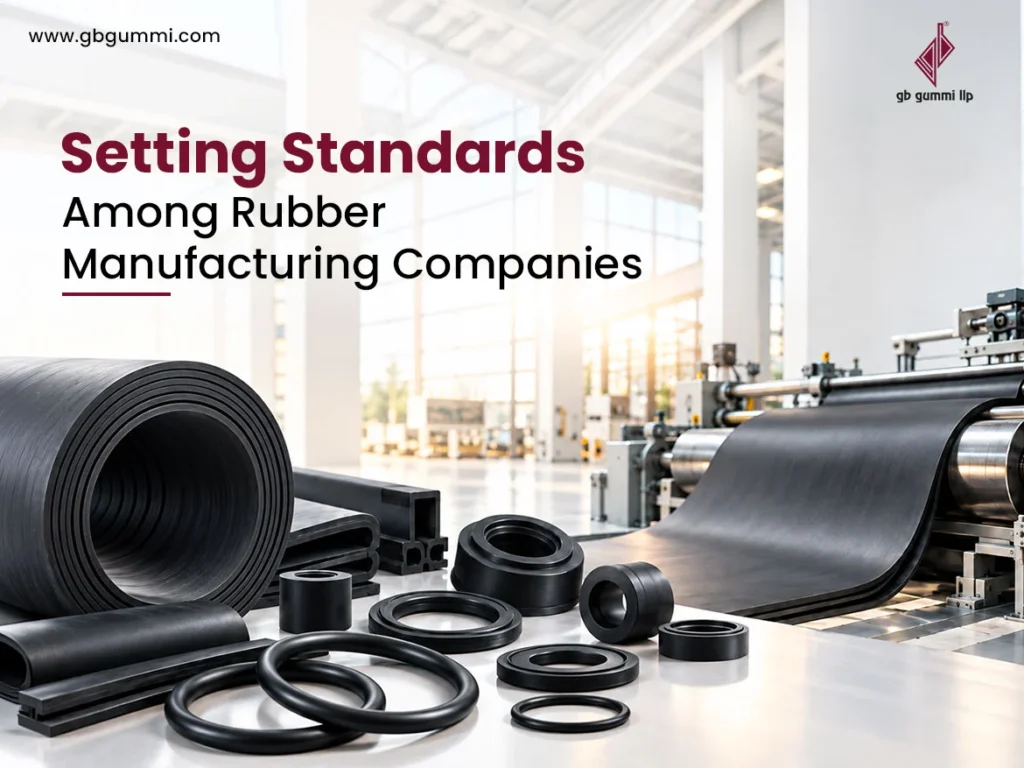
Rubber is used in countless industrial products, including seals, gaskets, O-rings, hoses, diaphragms, and other engineered components. However, each product may face a completely different operating environment.
That is why modern rubber manufacturing companies need both manufacturing capability and material expertise. By understanding the application first, manufacturers can recommend suitable compounds and help customers achieve the required balance of durability, resistance, flexibility, and performance.
This application-focused approach also helps reduce the risk of selecting a compound that performs well in one environment but struggles in another.
Our Approach to Quality Rubber Manufacturing at GB Gummi
At GB Gummi, we understand that dependable rubber performance starts with the right compound. As a rubber compound manufacturer, we use different material options to meet varied industrial requirements, rather than treating every application the same way.
Our expertise includes silicone rubber compound, EPDM rubber compound, SBR compound, and FKM compound, allowing us to address different demands related to temperature, weather, oils, fuels, chemicals, abrasion, and other operating conditions.
We combine material understanding with a strong focus on quality and consistency. More importantly, we look at where and how the rubber will perform. This helps us develop solutions that align with the needs of the final application.
For us, engineering excellence means making every compound with its purpose in mind. That approach enables GB Gummi to continue building its position among trusted rubber manufacturing companies serving diverse industrial needs.