
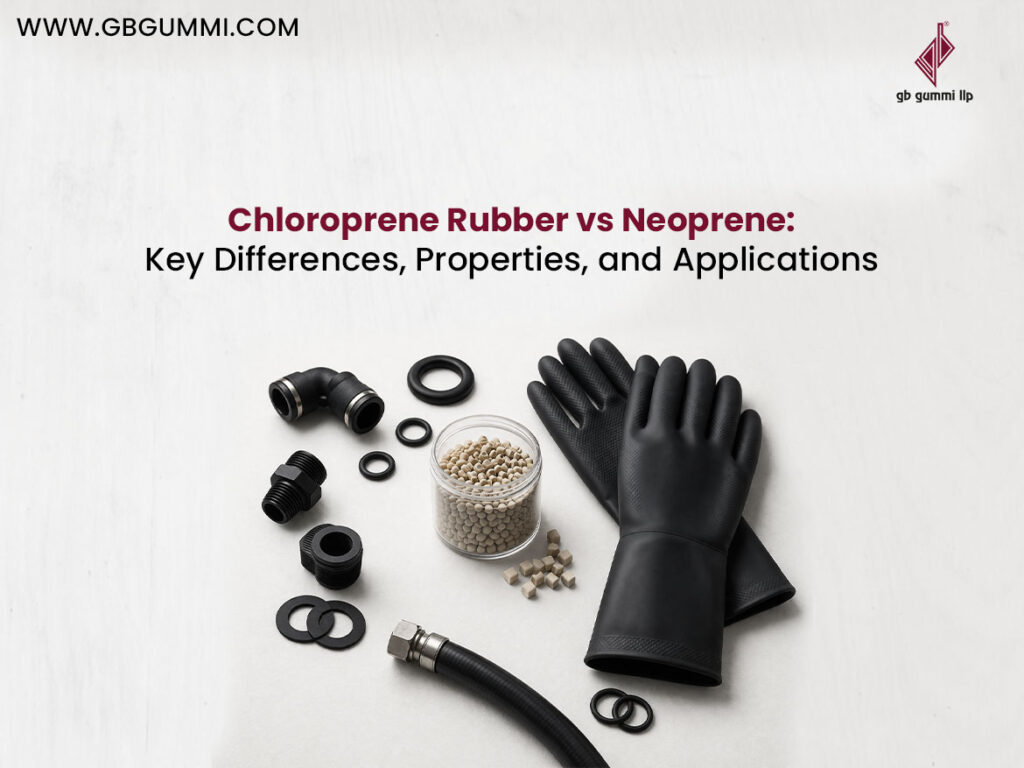
In industrial environments, materials are constantly exposed to heat, oils, chemicals, and mechanical stress. Over time, these conditions can affect performance, making it important to choose materials that are reliable and long-lasting.
One comparison that often creates confusion is chloroprene rubber vs neoprene. While the terms are commonly used interchangeably, they represent different stages of the same material.
In simple terms, chloroprene is the starting point, and neoprene is the material used in real-world applications.
Understanding Chloroprene as a Material
Chloroprene is a special liquid used to make rubber. It is not used directly in machines or products.
First, it is changed into rubber in factories.
People use it to:
- Make synthetic rubber
- Make other chemicals
- Make glues and coatings
So, chloroprene is just the starting material.
The final rubber made from it is what we actually use.
A Closer Look at Neoprene
Neoprene is the final material made from chloroprene. It is a durable type of rubber used in many industries.
Neoprene is popular because it offers a well-balanced combination of properties. The material can withstand oil, weather, and pressure while maintaining flexibility.
Additionally, neoprene is easy to shape and can be molded into a wide range of products. Manufacturers can also adjust their properties during production to suit different application requirements.
Unlike chloroprene, neoprene is stable and can be used directly in machines and products.
Chloroprene Rubber vs Neoprene: Key Differences
The main difference between chloroprene rubber and neoprene is how they are used.
- Chloroprene is a raw chemical that is used to make rubber. Neoprene is the final rubber material used in products.
- Chloroprene is a liquid and highly reactive, so it is used only in manufacturing processes. Neoprene, on the other hand, is solid and stable, which makes it suitable for real-world applications.
- Chloroprene is mainly used in chemical production, while neoprene is used in industries like automotive, construction, and manufacturing.
In simple terms, chloroprene is the starting material, and neoprene is the finished product that performs in actual applications.
Performance in Real-World Conditions: Chloroprene Rubber vs Neoprene
When evaluating performance, it’s important to clarify the difference between chloroprene and neoprene. Chloroprene is the base chemical compound (a monomer), while neoprene is the finished synthetic rubber made from it through polymerization. So in practical terms, real-world performance is judged based on neoprene, not chloroprene in its raw form.
In outdoor environments, neoprene performs very well. It resists damage from sunlight, ozone, and changing weather conditions, which makes it suitable for long-term use in exposed settings like seals, cables, and protective coverings.
Neoprene also offers reliable resistance to oils, greases, and certain chemicals. This is why it is widely used in automotive systems and industrial machinery where contact with such substances is common.
When it comes to temperature, neoprene remains stable across a broad range. It retains its flexibility in both moderately high and low temperatures, which allows it to perform consistently across different climates.
Another key strength is its mechanical durability. Neoprene can withstand stress, vibration, and repeated movement, making it ideal for components that need to operate continuously without degrading quickly.
In summary, while chloroprene is the building block, neoprene is the material that delivers real-world performance. Its balance of weather resistance, chemical stability, temperature tolerance, and durability makes it a dependable choice for demanding applications.
Chloroprene and Neoprene Application Comparison
The difference between chloroprene and neoprene becomes clearer when we see where they are used.
Chloroprene is mainly used in chemical factories to make rubber. It is part of the process but is not used in final products.
Neoprene, on the other hand, is used in many industries.
You can find it in:
- Automotive parts like seals, hoses, and gaskets
- Industrial O-rings and sealing parts
- Cable insulation and protective covers
- Waterproofing and construction materials
- Vibration control components
In simple terms, chloroprene stays in the background, while neoprene is used in real products.
Which One You Should Choose?
Choosing between chloroprene rubber and neoprene depends on your needs.
- If you work in chemical manufacturing or deal with raw materials, chloroprene is important.
- If you are designing products or working with machines, neoprene is the material you will use.
In most cases, neoprene is preferred because it is strong, flexible, and performs well in different conditions.
Role of Compounding in Performance
The performance of neoprene depends not only on the material itself but also on its preparation.
Through a process called rubber compounding, manufacturers mix various materials to improve properties such as strength, flexibility, and resistance.
This helps create rubber that is better suited for specific uses and lasts longer.
GB Gummi: Your Trusted Partner for High-Performance Rubber Solutions
At GB Gummi, we develop high-quality rubber compounds for industrial use. Our expertise in compounding enables us to produce polychloroprene rubber that performs well under heat, oil, and mechanical stress.
We begin by selecting the right raw materials and combining them using advanced compounding techniques to achieve precise material properties. This allows us to deliver consistent quality and performance across every product.
By focusing on quality and the specific needs of different applications, GB Gummi provides durable, reliable rubber solutions that industries can depend on for long-term performance.