
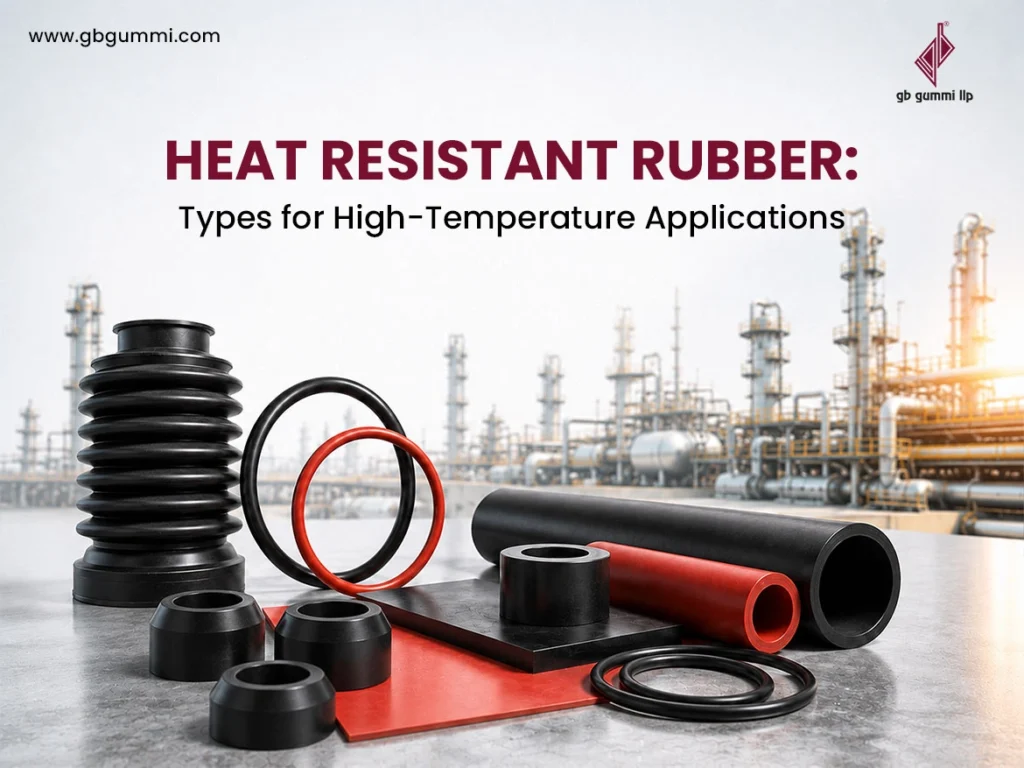
When machines work at very high temperatures, they need the right rubber parts to keep working properly. If the rubber cannot handle heat, it can become hard, crack, lose its shape, or stop sealing properly. This can lead to machine breakdowns, expensive repairs, and production delays.
That is why choosing the right heat-resistant rubber is very important. A good rubber material can stay strong and flexible even when exposed to high temperatures for a long time. As a result, it helps machines last longer and reduces maintenance costs.
In this blog, we will look at the best heat-resistant rubber materials, their features, and their common uses.
Why is Heat-Resistant Rubber Important?
Different rubber materials can handle different temperatures. Some start to wear out quickly when exposed to heat, while others continue working without losing their strength.
Using the right heat-resistant rubber offers many benefits, such as:
- Handles high temperatures without damage
- Stays flexible for a longer time
- Reduces cracking and hardening
- Increases the life of seals, gaskets, and hoses
- Lowers repair and replacement costs
Because of these benefits, many industries use heat-resistant rubber in their machines and equipment.
Silicone Rubber Compound for High-Temperature Applications
A silicone rubber compound is one of the most popular materials for high-temperature applications. It can work in both very hot and very cold conditions without losing its flexibility.
It also has good resistance to sunlight, rain, ozone, and moisture. Therefore, it works well both indoors and outdoors.
A silicone rubber compound is commonly used in:
- Electrical parts
- Medical equipment
- Food processing equipment
- Automotive seals
- Industrial tubes and hoses
However, silicone is not the best choice for applications that involve heavy oils or strong chemicals.
FKM / VITON Rubber Compound for Extreme Heat
When a machine operates in both high-heat and chemical environments, FKM/VITON rubber compound is a better choice. It can handle oils, fuels, chemicals, and high temperatures without losing its performance.
Because of this, many industries choose FKM/VITON rubber compounds for demanding applications.
It is commonly used in:
- Car engines
- Aircraft parts
- Oil and gas equipment
- Chemical plants
- High-performance seals and O-rings
Although it costs more than many other rubber materials, it lasts much longer. Therefore, it often saves money over time.
EPDM Rubber for Heat and Weather Resistance
EPDM rubber is another good option for applications that face heat and outdoor weather. It performs well in sunlight, rain, steam, and ozone.
Because of this, EPDM rubber is widely used in products that stay outdoors for long periods.
Some common uses include:
- Roofing systems.
- Door and window seals.
- Automotive weatherstrips.
- Steam hoses.
- HVAC systems.
However, EPDM rubber is not suitable for applications that come into contact with petrol, diesel, or oils.
How to Choose the Right Heat-Resistant Rubber?
Choosing the right heat-resistant rubber is not only about temperature. You should also think about where and how the rubber will be used.
Before selecting a material, ask these questions:
- How hot will the application become?
- Will the rubber touch oil or chemicals?
- Will it be used indoors or outdoors?
- Does it need to stay flexible?
- How long should it last?
For example, a silicone rubber compound is a good choice when flexibility and clean environments are important. On the other hand, FKM / VITON Rubber compound is better for oils, fuels, and chemicals. Meanwhile, EPDM rubber works best in outdoor and weather-exposed applications.
Choosing the right material helps improve machine performance and reduce future maintenance needs.
GB Gummi’s Approach to Heat-Resistant Rubber Solutions
At GB Gummi, we know that every industry has different needs. That is why we help our customers choose the right heat-resistant rubber for their applications.
We manufacture high-quality silicone rubber compounds, FKM/VITON rubber compounds, and EPDM rubber for various industries. We carefully understand your operating temperature, working conditions, and performance needs before recommending the right material.
Whether you need rubber compounds for automotive, industrial machines, chemical plants, or other manufacturing applications, we are here to help. Our goal is to provide durable rubber solutions that last longer, reduce maintenance, and perform reliably even in high-temperature environments.