
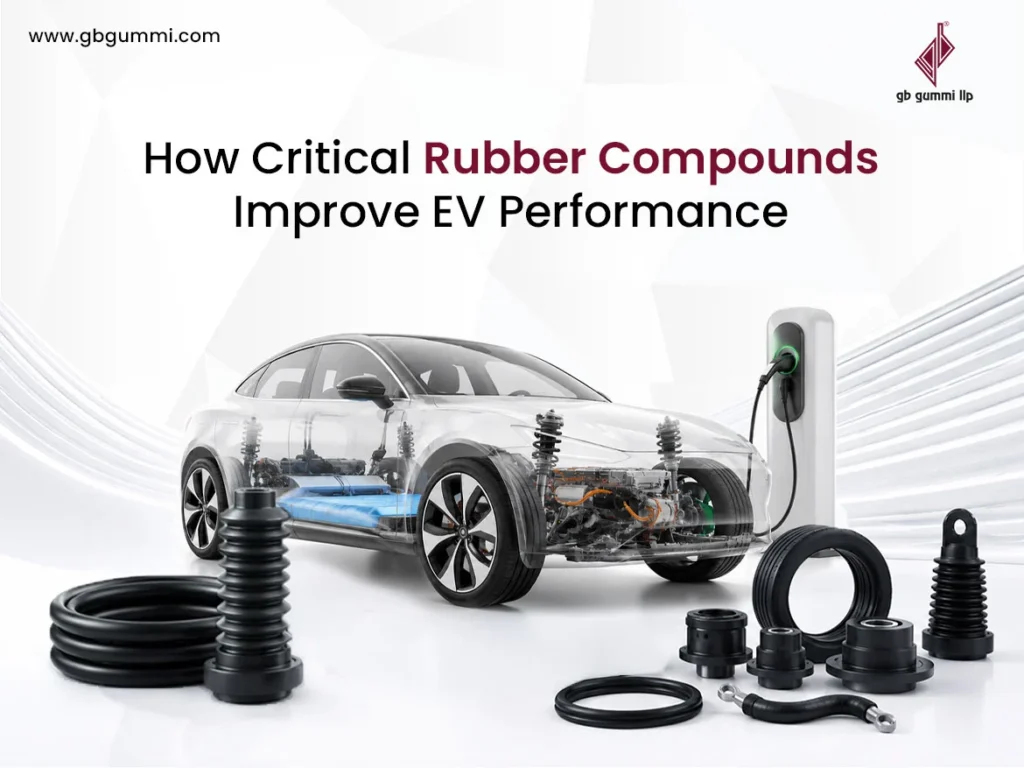
What makes an electric vehicle safe and reliable?
An electric vehicle (EV) depends on many parts working together smoothly. However, one important part that people often overlook is EV rubber compounds. These specially made rubber materials help seal, protect, and support important EV components. They also reduce vibration, keep out water and dust, and protect sensitive electrical systems. As electric vehicles become more advanced, manufacturers need rubber compounds that perform well across a wide range of conditions.
Unlike regular automotive rubber, EV rubber compounds are designed to withstand high temperatures, changing weather conditions, and continuous use. They help improve the safety, efficiency, and lifespan of batteries, motors, and charging systems.
In this blog, we will explain what EV rubber compounds are, why they are important, the materials used to make them, where they are used, and how they help electric vehicles perform better.
What Are EV Rubber Compounds?
EV rubber compounds are specially developed rubber materials used in different parts of electric vehicles. Since EVs have batteries, electric motors, and electronic systems, they need rubber that can handle heat, electricity, and outdoor conditions.
These compounds provide:
- Strong sealing
- Good flexibility
- Vibration control
- Electrical insulation
- Long-lasting durability
- High electrical insulation
- Resistance to water, coolants, and automotive fluids ,
- Low compression set for long-term sealing.
Manufacturers also create different rubber compounds for different purposes. For example, one part may need better weather resistance, while another may need better chemical or heat resistance.
Choosing the right EV rubber compounds helps improve the safety and life of an electric vehicle.
Why Are EV Rubber Compounds Important?
Electric vehicles work differently from petrol or diesel vehicles. Therefore, they need materials that can withstand higher temperatures and protect sensitive electrical components.
Some of the main benefits of EV rubber compounds include:
- Excellent electrical insulation
- Protection from water, dust, and moisture
- High heat resistance
- Reduced vibration and noise
- Longer service life
- Resistance to sunlight, ozone, and harsh weather
In addition, these compounds stay flexible even when temperatures change. As a result, seals and gaskets continue to work properly in both hot and cold weather.
Because of these benefits, EV rubber compounds play an important role in making electric vehicles safer and more reliable.
Common Materials Used in EV Rubber Compounds
Different EV parts require different types of rubber. Therefore, manufacturers choose materials based on the needs of each application.
EPDM rubber
EPDM rubber is one of the most commonly used materials in electric vehicles. It offers excellent resistance to heat, sunlight, ozone, rain, and moisture. It also stays flexible for a long time.
Manufacturers commonly use EPDM rubber in:
- Door seals
- Window seals
- Battery enclosure seals
- Charging port gaskets
- Cooling system seals
- Weather strips
Since electric vehicles are used in different weather conditions, EPDM rubber provides dependable performance for many years.
FKM Compound
A FKM Compound is used in areas where high temperatures and chemical resistance are important. It performs well even when exposed to oils, coolants, and other harsh fluids.
A FKM Compound is commonly used in:
- Battery cooling systems
- High-temperature seals
- Motor components
- Cooling circuits
- Chemical-resistant gaskets
Because EV batteries generate heat during charging and operation, FKM Compound helps maintain a strong, reliable seal. Therefore, manufacturers use it in important parts where long-lasting performance is essential.
Where Are EV Rubber Compounds Used?
Electric vehicles contain many rubber parts that improve both safety and performance. Therefore, EV rubber compounds are used throughout the vehicle.
Some common applications include:
- Battery pack seals
- Charging connector seals
- Cable insulation
- High-voltage connector seals
- Cooling system gaskets
- Suspension bushings
- Motor mounts
- Door and window seals
- Vibration dampers
- Waterproof enclosure seals
These components reduce vibration, block dust and moisture, improve passenger comfort, and protect sensitive electrical parts.
As electric vehicle technology continues to grow, manufacturers rely even more on high-quality EV rubber compounds to improve vehicle performance and durability.
How We Develop High-Performance EV Rubber Compounds at GB Gummi
At GB Gummi, we understand that electric vehicles need reliable materials that perform well every day. That is why we develop high-quality EV rubber compounds for different EV applications.
We use premium materials such as EPDM rubber and FKM compound, tailored to the performance requirements of each component. We focus on heat resistance, weather resistance, sealing performance, flexibility, and long-term durability.
Our team works closely with customers to understand their requirements and recommend the right rubber solution. This helps manufacturers improve product quality, safety, and performance.
Whether for battery sealing, vibration control, cooling systems, or electrical insulation, we are committed to delivering dependable EV rubber compounds that meet the evolving needs of the electric vehicle industry.