
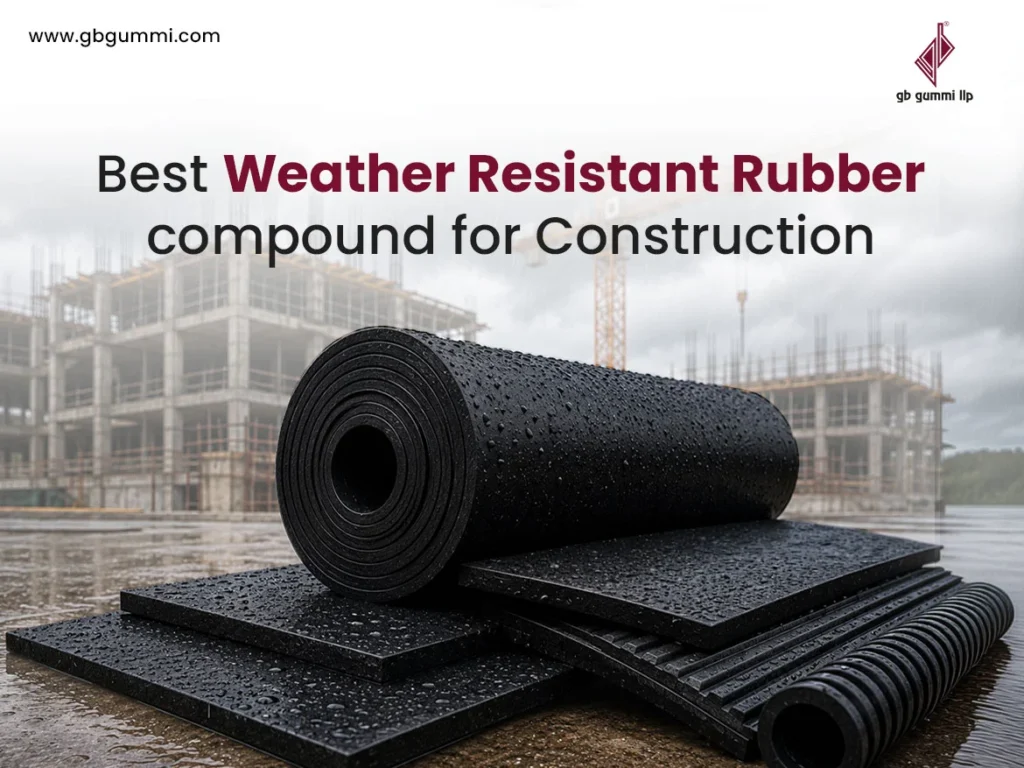
Selecting the right weather-resistant rubber material is important for construction projects exposed to sunlight, rain, heat, cold, moisture, and outdoor pollution. Rubber components used in buildings, bridges, roofing systems, and sealing applications must stay strong and flexible for many years. Therefore, choosing the right material helps prevent leakage, cracking, early damage, and frequent replacement.
In this blog, we will explain how to choose the right weather-resistant rubber material for construction and compare commonly used materials, including EPDM rubber, silicone rubber compound, nitrile rubber, and neoprene.
Importance of Weather-Resistant Rubber Material in Construction
Weather-resistant rubber plays an important role in protecting buildings and structures from outdoor damage. Since construction parts are exposed to changing weather every day, the material must perform well without losing its shape, strength, or flexibility.
It is commonly used in:
- Window and door seals
- Roofing membranes
- Expansion joints
- Façade systems
- Waterproofing components
- Bridge bearing pads.
- Skylight and curtain wall seals.
- Glass glazing gaskets.
Moreover, the right rubber material improves sealing performance and helps construction systems last longer.
Key Features of Weather-Resistant Rubber Material
A good weather-resistant rubber material should protect construction components from environmental stress. It should resist sunlight, moisture, ozone, and temperature changes without cracking or becoming hard.
Important features include:
- UV and sunlight resistance
- Ozone cracking protection
- Moisture and rain resistance
- Flexibility in hot and cold weather
- Strong sealing performance
- Long service life
Therefore, before selecting any rubber material, it is important to understand the working environment and expected performance requirements.
EPDM Rubber for Outdoor Construction Use
EPDM rubber is one of the most preferred materials for outdoor construction applications. It offers excellent resistance to sunlight, ozone, rain, and aging. As a result, it performs well in applications that remain exposed to changing weather for extended periods.
Construction companies commonly use EPDM rubber in roofing systems, window seals, door gaskets, façade sealing, waterproofing strips, and outdoor profiles. In addition, it stays flexible across different weather conditions. Therefore, EPDM rubber is often considered a reliable weather-resistant rubber material for long-term construction use.
Silicone Rubber Compound for Temperature Resistance
A silicone rubber compound is a suitable choice when construction components need to perform in very high or very low temperatures. It offers strong resistance to heat, cold, UV exposure, and moisture.
Because of this, a silicone rubber compound is often used in glazing seals, lighting systems, electrical insulation components, high-temperature sealing applications, and specialized construction applications. Moreover, it maintains flexibility even under extreme temperature conditions, making it useful where temperature stability is important.
Nitrile Rubber for Oil and Fuel Exposure
Nitrile rubber is mainly known for its excellent resistance to oils, fuels, and lubricants. Although it may not be the strongest choice for continuous outdoor exposure, it performs well in construction areas where oil contact is common.
For example, nitrile rubber is suitable for construction machinery, hydraulic systems, equipment seals, fuel-contact components, and industrial gaskets. Therefore, it becomes a better choice when oil resistance is more important than direct weather exposure.
Neoprene for Balanced Strength and Weather Performance
Neoprene is a strong and flexible rubber material. It can handle outdoor weather, movement, vibration, and light oil contact. It also gives a good balance of strength, weather resistance, and chemical resistance.
Neoprene is commonly used in:
- Bridge bearings
- Expansion joints
- Vibration pads
- Structural seals
- Heavy-duty construction parts
Also, neoprene performs well under pressure and movement. Therefore, it is useful for construction components that require both strength and flexibility.
Selection Factors for Weather-Resistant Rubber Material
Choosing the right weather-resistant rubber material depends on where and how it will be used. Every construction project has different needs, so the material should match the weather, temperature, pressure, and exposure conditions.
For long outdoor use, EPDM rubber is usually a good choice. However, a silicone rubber compound works better in high-temperature areas. Similarly, nitrile rubber is useful where oil or fuel contact is present. On the other hand, neoprene works well when the application needs strength, movement resistance, and weather protection.
Benefits of Choosing the Right Weather-Resistant Rubber Material
The right weather-resistant rubber material helps construction parts last longer and perform better. It also reduces problems like water leakage, cracking, hardening, and early damage.
Main benefits include:
- Better protection from weather damage
- Longer life of rubber parts
- Better sealing performance
- Lower maintenance cost
- Fewer replacements
- Better safety and reliability
As a result, proper material selection helps construction systems work better in outdoor conditions.
Weather-Resistant Rubber Solutions at GB Gummi
At GB Gummi, we understand that every construction project has different needs. Therefore, we help customers choose the right weather-resistant rubber material based on the application, working conditions, and durability needs.
We manufacture customized rubber solutions using EPDM, silicone, nitrile, and neoprene. Our focus is on quality, consistency, and long-term performance. As a result, we deliver rubber components that offer strong sealing, protection, and durability in challenging construction environments.