
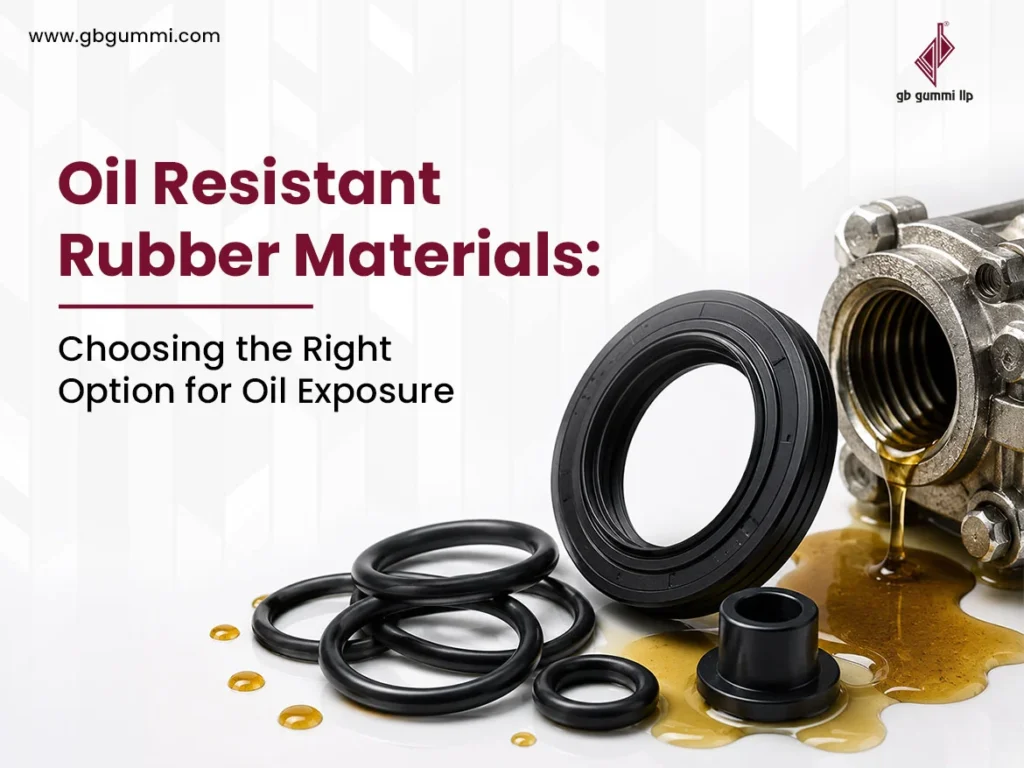
Have you ever noticed how some rubber parts swell, crack, or lose shape when they come in contact with oil? This usually happens when the wrong rubber material is used. In industry, rubber parts often come into contact with oil, grease, fuel, lubricants, and chemicals. If the material cannot withstand these fluids, it may fail early, affecting the entire machine. That is why choosing the right oil-resistant rubber materials is very important. They help rubber parts remain strong, flexible, and useful even when exposed to oily conditions for extended periods. In this blog, we will understand what oil-resistant rubber is, why it matters, and which materials are best for industrial use.
What Are Oil-Resistant Rubber Materials?
Oil-resistant rubber materials are rubber compounds that can withstand contact with oil, fuel, grease, and petroleum-based fluids without degrading quickly. They are used to make many industrial parts, such as:
- Seals
- Gaskets
- O-rings
- Hoses
- Rubber sheets
- Machine parts
The main job of oil-resistant rubber materials is to stop leakage, maintain sealing, and protect machines from failure. Unlike normal rubber, they do not swell easily or lose strength when exposed to oil. This makes them useful in industries where rubber parts regularly come in contact with oily or chemical fluids.
Why Oil Resistance Matters in Industries?
Oil can damage many ordinary rubber materials. When rubber absorbs oil, it may become too soft, too hard, swollen, cracked, or weak. Once this happens, the rubber part may stop sealing properly. For example, if a gasket or seal fails within a machine, it can cause leakage, pressure loss, and equipment damage. This can also increase repair costs and machine downtime. This is why industries carefully choose oil-resistant rubber materials based on the type of oil, working temperature, pressure, and chemical exposure. Good oil-resistant rubber materials help improve safety, reduce maintenance, and extend machine life.
NBR Rubber for Oil Resistance
NBR rubber, also known as nitrile rubber, is one of the most commonly used materials for oil resistance. It works well in applications where rubber parts come in contact with oil, grease, fuel, and lubricants. NBR rubber is commonly used in:
- Fuel systems
- Hydraulic equipment
- Oil seals
- Gaskets
- O-rings
- Automotive components
One of the biggest advantages of NBR rubber is its good oil resistance at a reasonable cost. It also has good strength and can handle regular wear and tear. However, NBR rubber may not be the best choice for very high heat or highly aggressive chemicals. For such conditions, industries may need a more advanced material.
FFKM Compound for Extreme Conditions
In very harsh industrial conditions, FFKM compounds are often used. FFKM stands for perfluoroelastomer. It is a high-performance rubber material designed for extreme environments. An FFKM rubber compound can handle:
- High temperatures
- Strong chemicals
- Oils and fuels
- Aggressive fluids
- Harsh industrial conditions
FFKM compound solutions are often used in industries where failure is not acceptable. These include oil and gas, chemical processing, aerospace, semiconductor manufacturing, and high-temperature machinery applications. The main benefit of an FFKM rubber compound is its excellent resistance to both heat and chemicals. It lasts longer than many standard rubber materials in difficult conditions. However, FFKM compounds are more expensive than common rubber compounds. Therefore, they are usually selected for critical applications where long life and high performance are more important than the initial cost.
Other Factors to Consider Before Choosing Oil-Resistant Rubber Materials
Choosing the right material is not only about oil resistance. The material must be evaluated based on actual working conditions.
Type of Oil or Fluid
First, understand the type of oil or fluid the rubber will come into contact with. Different oils, fuels, and chemicals affect rubber in different ways. A material that works with one fluid may not work well with another.
Temperature
Some rubber materials work well at normal temperatures, while others can withstand very high temperatures. If the material cannot handle heat, it may crack or lose flexibility over time.
Pressure
Pressure is also important. In high-pressure systems, the rubber must stay strong and maintain its shape. If it becomes weak, the seal may fail.
Cost and Long-Term Value
A cheaper rubber may save money at first, but if it fails quickly, it can increase repair and replacement costs. Therefore, it is better to choose a material that offers long-term value and reliability.
Why Quality Rubber Compounding Matters?
The performance of rubber depends not only on the base material but also on the compound’s quality. A well-developed rubber compound can improve strength, flexibility, heat resistance, and oil resistance. This is where the right manufacturing expertise becomes important. Good compounding helps create oil-resistant rubber materials that perform better in real industrial conditions. For industries, this means fewer failures, better sealing, longer service life, and smoother machine performance.
Choose Reliable Oil-Resistant Rubber Materials with GB Gummi
At Gummi, we understand that rubber parts must perform reliably in real working conditions. Even a small seal, gasket, or hose can affect the performance of an entire machine. With strong experience in rubber compounding, GB Gummi helps industries select and develop the right oil-resistant rubber materials for different applications. Whether the need is for NBR rubber, advanced FFKM compound solutions, or specialized FFKM rubber compound formulations, our focus remains on quality, durability, and consistent performance. We work to deliver rubber solutions that can handle oil, heat, pressure, and demanding industrial environments with confidence.