
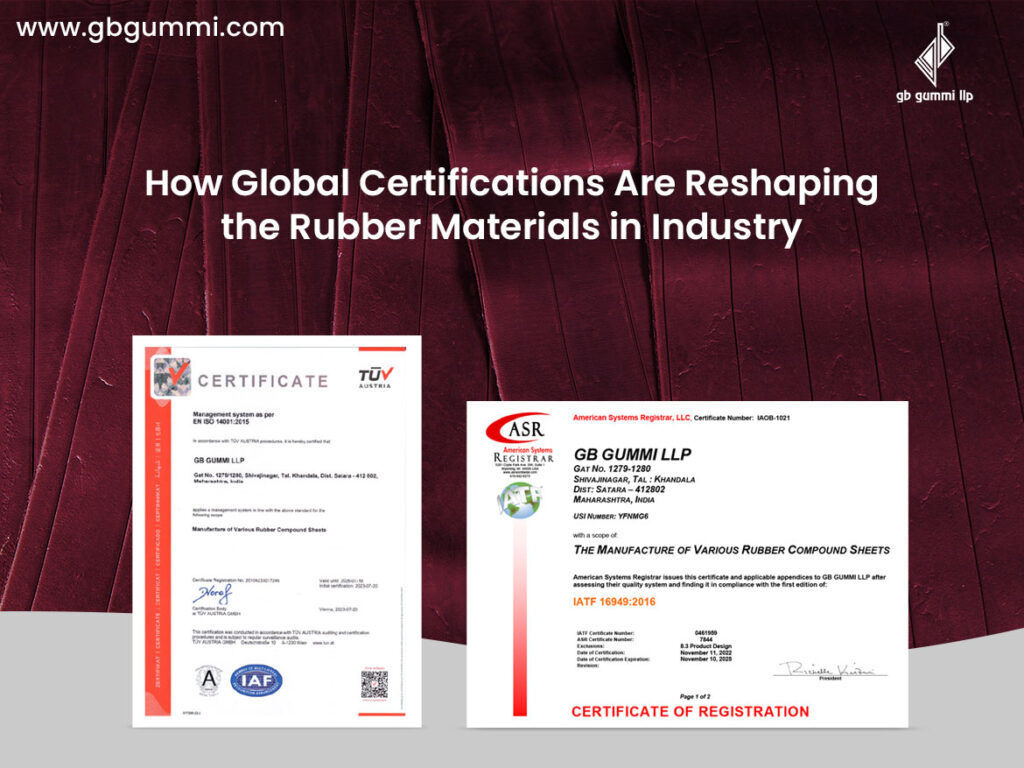
Global trade keeps getting wider and more demanding, and with that, the expectations from rubber materials have changed quite a bit. What used to be a simple requirement has turned into something far more layered. For Indian manufacturers like GB Gummi, who supply precision moulded parts to automotive, engineering, construction, and several other industrial sectors, meeting international standards isn’t just a box to tick. It has become a strategic piece of the whole business, something that directly affects market entry, credibility, and long term competitiveness.
Over the past few years, international buyers have increased their scrutiny. Everything is monitored closely—from chemical composition to sustainability practices. Even the transparency of production systems comes under the spotlight. With newer compounds such as nbr nitrile and Neoprene being widely used in global applications, exporters are expected to demonstrate their compliance with evolving standards. Because of this, companies supplying rubber products need to stay ahead of fast-changing certifications, environmental rules and digital verification systems.
In this blog, we’ll talk about the regulatory and certification trends that are shaping the future of rubber materials, along with what Indian manufacturers should keep in mind if they want to stay competitive.
The Rise of Global Certifications: ISO, PEFC, and Industry Specific Standards
International customers have a clear expectation now. They want their suppliers to meet well known global certifications, especially when the products involve engineered or performance critical rubber components. Certifications like ISO and PEFC matter because they build trust. They show that the manufacturer has consistent processes and responsible sourcing.
ISO Standards for Rubber Manufacturers
There are two ISO standards that tend to matter the most in this sector.
- ISO 9001 ensures a strong and consistent quality management system.
- ISO 14001 indicates that the company is following environmental management practices that meet international expectations.
For exporters working with engineered materials—including specialty compounds like nbr nitrile—ISO certification is often essential for approval by global brands. Many international buyers require proof of traceability and discipline in production, both of which are supported by ISO standards.
For manufacturers using natural rubber or blends, a sustainability certification like PEFC helps a lot, especially in markets like Europe or Japan. With the world moving toward greener supply chains, these certifications give customers confidence that the material they’re buying is responsibly sourced.
Compliance with Chemical and Regional Standards: A Non Negotiable Requirement
Every region has its own rules around chemicals, safety limits, and acceptable substances in rubber materials. As environmental regulations become stricter, exporters must make sure that their products don’t violate any local or international requirements.
Some important regulations include:
- REACH (EU) which limits hazardous chemicals.
- RoHS (EU) which controls materials used in electrical and electronic parts.
- California Proposition 65 (USA) which deals with chemicals linked to health risks.
- China GB Standards which specify testing and material performance rules.
For Indian exporters, managing these regulations can feel complicated, but it is essential. Non compliance can lead to rejected shipments or even getting removed from approved supplier lists. This is especially crucial when dealing with specialised materials like Neoprene, which must adhere to region-specific chemical controls.
Traceability Is the New Backbone of Global Supply Chains
The disruptions after the pandemic made one thing very clear. Transparency is extremely important. Global buyers now expect manufacturers to maintain visibility across sourcing, compounding, and production. This is even more important for rubber components used in places where safety is critical, like in vehicles, oil and gas setups, or industrial machines.
Why Traceability Matters
- It helps ensure natural rubber is ethically sourced.
- It tracks the use of recycled rubber for sustainability needs.
- It makes it easier to identify any batch related issues.
- It prevents low quality or counterfeit materials from entering the supply chain.
- It keeps manufacturers prepared for audits.
Because of these reasons, many global buyers openly state that supply chain traceability is important for long term partnerships. Today, it isn’t enough to present a quality certificate. Buyers want to see exactly where the material came from and how it moved through the system.
Digital Traceability: The Future of Credibility in International Markets
Industries everywhere are moving toward digital verification, and rubber exporters are doing the same. Digital traceability gives manufacturers a stronger reputation and helps buyers trust the data. More companies now use systems like blockchain, QR codes on production batches, ERP based tracking, and digital quality logs.
How Digital Systems Help Rubber Exporters:
- Automated documents cut down on audit fatigue.
- Live batch data reduces quality variations.
- Cloud based records improve transparency.
- Digital reports speed up supplier approvals.
International OEMs usually prefer suppliers who work with such systems since it reduces risk and improves reliability. For GB Gummi, investing in digital traceability strengthens their position in global markets.
Sustainability and Eco Friendly Rubber: A Growing Market Demand
Global buyers are under pressure to choose materials that have a lower carbon footprint. Because of this, there’s more interest in eco-friendly rubber and recycled rubber materials across Europe, North America, and APAC.
A few sustainability driven requirements include:
- Higher recycled content for regulatory benefits.
- Reduced VOC emissions during production.
- Bio based alternatives to traditional polymers.
- Better disposal methods with lower environmental impact.
For Indian manufacturers, these needs bring both challenges and opportunities. While it may require reworking compounds or upgrading processes, it opens doors to premium markets that prioritise sustainability.
Market Differentiation Through Certification: What Global Buyers Really Want
In today’s competitive export market, offering a product alone isn’t enough. Buyers want assurance. They want proof of consistency, responsibility, and long term stability. Certifications and traceability systems help manufacturers stand apart from the rest.
Certified manufacturers usually receive:
- Faster vendor approvals.
- Greater trust and less frequent inspections.
- Higher pricing power in some cases.
- Better chances at long term contracts.
- Access to highly regulated markets like the EU, USA, and Japan.
For companies like GB Gummi, these benefits translate into stronger international positioning and long term relationships.
How Indian Manufacturers Can Stay Ahead
India is becoming a significant hub for rubber exports, but staying competitive means investing in better compliance, greener processes, and smarter technologies.
Some important action areas include:
- Upgrading testing labs to meet international benchmarks.
- Implementing digital traceability for raw materials and batch production.
- Adopting sustainability certifications for eco focused markets.
- Training teams on changing global regulations.
- Reformulating materials—including specialty rubbers like nbr nitrile—to meet region-specific standards
Manufacturers who adopt these changes early tend to be the ones who get preferred status with global buyers.
The Future of Rubber Exports Belongs to the Compliant and Traceable
The global market is moving toward transparency, sustainability, and digital verification. For Indian exporters, keeping up with these trends is crucial for long term success. As certifications shape expectations across international markets, manufacturers need to offer not just high quality rubber materials but also verifiable data, clean sourcing, and responsible production.
Companies like GB Gummi that invest in stronger certifications, innovative processes, and sustainability will be the ones leading the next chapter of global rubber exports. The direction is quite clear. Quality has to be proven, not just claimed, and the manufacturers who can show this proof will define the future of the industry.